
Understanding Air Conditioner Capacitor Sizing and Its Importance in System Performance
Air-conditioning systems rely on several electrical components, and one of the most important is the capacitor. Although it is small and inexpensive, the capacitor helps the compressor and fan motor start and continue running efficiently. Choosing the correct capacitor size is essential for reliable performance and a long equipment lifespan.
What Does a Capacitor Do?
A capacitor stores electrical energy and releases it quickly to provide the extra power needed to start the compressor and fan motor. When a capacitor fails, the air conditioner may hum without starting, overheat, or trip the circuit breaker.
Capacitor Size by AC Capacity
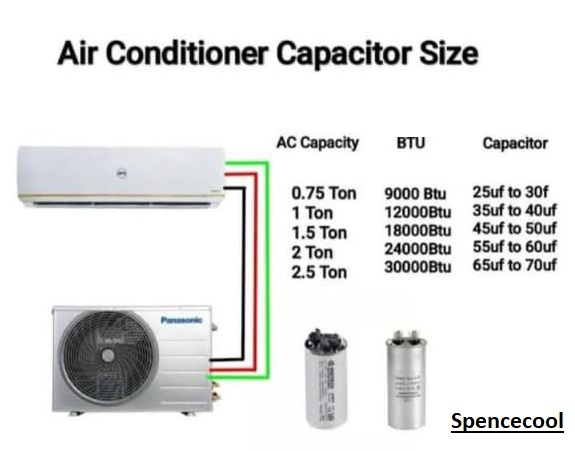
Capacitor ratings increase as compressor size increases.
- 0.75 Ton (9,000 BTU): 25–30 µF
- 1 Ton (12,000 BTU): 35–40 µF
- 1.5 Ton (18,000 BTU): 45–50 µF
- 2 Ton (24,000 BTU): 55–60 µF
- 2.5 Ton (30,000 BTU): 65–70 µF
Larger compressors require more starting torque, which is why higher-capacity air conditioners use higher microfarad ratings.
Problems Caused by the Wrong Capacitor
If the capacitor is too small:
- The compressor struggles to start.
- The unit may hum or trip the circuit breaker.
- Repeated failed starts can eventually damage the compressor.
If the capacitor is too large:
- The motor receives excessive starting current.
- Winding insulation deteriorates faster.
- The compressor's lifespan is reduced.
Impact on Energy Efficiency
Using the wrong capacitor increases electricity consumption and places unnecessary stress on electrical components, leading to higher energy bills and more frequent repairs.
How to Choose the Correct Capacitor
Never choose a capacitor based on its physical appearance. Always match the microfarad (µF) rating printed on the old capacitor or follow the manufacturer's specification label.
Signs of a Failing Capacitor
- Slow starting
- Buzzing or humming sounds
- Intermittent cooling
- Outdoor fan runs while the compressor remains off
Maintenance Tips
- Inspect capacitors during routine servicing.
- Replace weak or swollen capacitors immediately.
- Use the exact manufacturer-recommended µF rating.
- Test capacitors with a capacitance meter before replacement.
Conclusion
Proper capacitor sizing is essential for smooth starting, stable operation, reduced energy consumption, and longer compressor life. Replacing a failing capacitor with the correct rating is one of the simplest ways to protect the most expensive component in an air-conditioning system—the compressor.
Comments
Share Your Thoughts
Recent Comments