
Air Conditioning (AC): Complete Guide
Types, Working Principles, and Leakage-Free Installation
1. What is Air Conditioning?
Air Conditioning (AC) is the process of controlling indoor temperature, humidity, air quality, and airflow to provide comfort and safety for people and equipment.
An AC system:
- Cools the air.
- Removes heat.
- Controls humidity.
- Filters dust and contaminants.
- Improves ventilation.
AC systems are commonly used in homes, offices, hospitals, schools, data centers, factories, and vehicles.
2. Basic Working Principle of an AC
Air conditioners work using the refrigeration cycle.
Main Components
- Compressor
- Condenser coil
- Expansion valve
- Evaporator coil
- Refrigerant
Cooling Cycle
Step 1 – Compression
Low-pressure refrigerant gas is compressed into a hot, high-pressure gas.
Step 2 – Condensation
The hot gas releases heat through the condenser and becomes liquid.
Step 3 – Expansion
The liquid passes through the expansion valve, where pressure drops and the refrigerant becomes very cold.
Step 4 – Evaporation
The cold refrigerant absorbs heat from the room through the evaporator, while the fan blows cool air into the room.
The cycle repeats continuously.
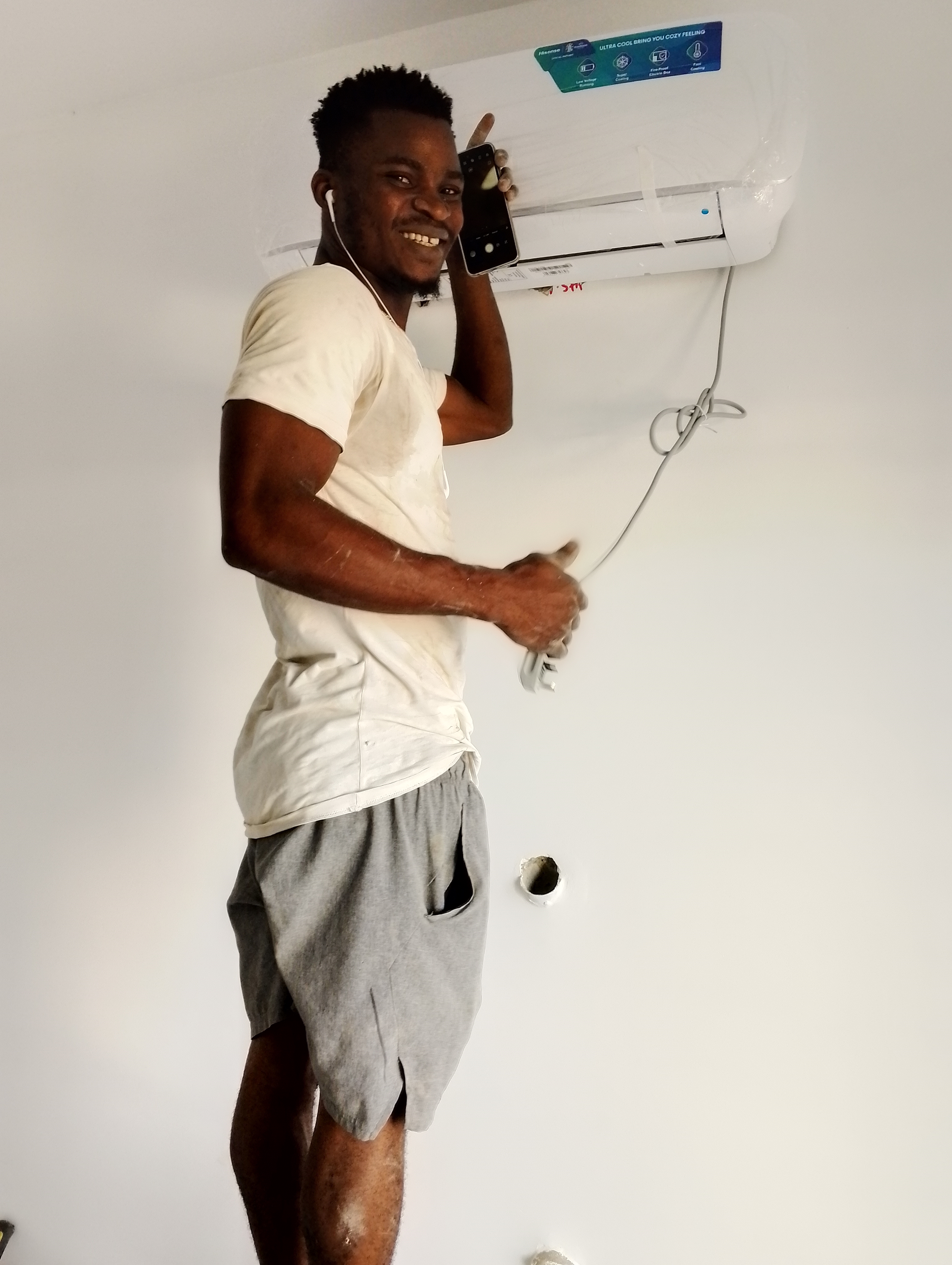
3. Types of Air Conditioners
3.1 Window AC
A single compact unit fitted into a window or wall opening.
Features
- Easy installation
- Low cost
- Suitable for small rooms
- Capacity: 1–2 HP
Pros
- Affordable
- Simple maintenance
Cons
- Noisy
- Blocks windows
- Less energy efficient
3.2 Split AC
A split AC consists of two separate units:
- Indoor unit (evaporator)
- Outdoor unit (compressor and condenser)
Both units are connected by copper pipes.
Features
- Quiet operation
- Stylish appearance
- Better efficiency
- Capacity: 1–3 HP
Pros
- Low noise
- Better cooling
- Energy efficient
Cons
- Higher installation cost
- Requires professional installation
3.3 Portable AC
A movable air conditioner with an exhaust hose.
Pros
- No permanent installation
- Easy to relocate
Cons
- Noisy
- Less efficient
3.4 Cassette AC
Mounted on ceilings and commonly used in offices and shops.
It provides four-way airflow and covers larger spaces.
3.5 Ducted/Central AC
A large system that distributes cooled air through ducts.
Commonly used in malls, hotels, hospitals, and commercial buildings.
Pros
- Uniform cooling
- Hidden installation
Cons
- Expensive
- Complex maintenance
3.6 Inverter AC
Uses a variable-speed compressor.
Benefits
- Saves 30–50% electricity
- Faster cooling
- Lower noise
- Longer lifespan
Inverter ACs are highly recommended for homes.
4. AC Installation Guide (Leak-Free Method)
Proper installation prevents:
- Gas leakage
- Water leakage
- Poor cooling
- Compressor damage
5. Tools Required
- Vacuum pump
- Manifold gauge
- Flaring tool
- Torque wrench
- Pipe cutter
- Insulation tape
- Spirit level
- Drill machine
- Leak detector or soap solution
6. Split AC Installation
Indoor Unit
- Install 7–8 feet above the floor.
- Keep away from direct sunlight.
- Ensure good airflow.
- Install near a drainage point.
Avoid
- Heat sources
- Direct sunlight
- Obstructed walls
Outdoor Unit
- Use a firm concrete base.
- Ensure proper ventilation.
- Provide enough servicing space.
- Shade is preferable.
Avoid
- Closed spaces
- Direct rain exposure
- Weak brackets
7. Copper Pipe Installation (Prevent Gas Leakage)
Most gas leaks happen at pipe connections.
- Use refrigeration-grade copper pipes.
- Cut with a pipe cutter instead of a hacksaw.
- Remove burrs from the pipe.
- Create smooth, crack-free flares.
- Tighten flare nuts with a torque wrench.
- Insulate all copper pipes.
8. Vacuuming (Very Important)
Vacuuming removes air, moisture, and dirt from the system. Skipping this step can cause ice blockage, poor cooling, and compressor damage.
Vacuum Procedure
- Connect the manifold gauge.
- Connect the vacuum pump.
- Run for 20–30 minutes.
- Reach approximately -30 inHg.
- Close the valve.
- Wait 10 minutes.
- If pressure rises, repair the leak before releasing refrigerant.
9. Gas Charging
- Release factory refrigerant only after vacuuming.
- Open the liquid valve first.
- Open the gas valve slowly.
- Check operating pressure.
Never
- Mix different refrigerants.
- Overcharge the system.
10. Water Drainage Installation
Correct drainage prevents indoor water leakage.
Drain Pipe Rules
- Maintain a downward slope.
- Avoid upward loops.
- Keep connections tight.
- Insulate the drain pipe.
Test
Pour water into the drain tray and confirm that it flows freely.
11. Electrical Installation
- Use the correct wire size.
- Install a dedicated breaker.
- Ensure proper earthing.
- Tighten all electrical connections.
12. Final Testing
After installation, check:
- Cooling performance
- Noise level
- Drainage
- Gas pressure
- Vibration
- Water leakage
Use soap solution to test all joints for leaks.
13. Common Causes of Gas Leakage
- Bad flaring
- Loose flare nuts
- Poor brazing
- Old copper pipes
- Physical damage
- Skipping vacuuming
14. Common Causes of Water Leakage
- Blocked drain pipe
- Incorrect drain slope
- Dirty air filter
- Frozen evaporator coil
- Poor insulation
15. Maintenance Tips
Every 3–6 months:
- Clean filters.
- Clean coils.
- Check refrigerant pressure.
- Clear the drain pipe.
- Tighten fittings.
- Inspect insulation.
16. Professional Best Practices
Always
- Vacuum the system.
- Use a torque wrench.
- Insulate pipes.
- Test for leaks.
- Follow manufacturer specifications.
- Use quality materials.
Never
- Skip vacuuming.
- Guess refrigerant pressure.
- Use poor-quality copper pipes.
- Overtighten flare nuts.
17. Conclusion
A reliable AC system depends on:
- Correct AC selection
- Proper installation
- Leak-proof piping
- Good drainage
- Regular maintenance
When installed correctly, an air conditioner can operate for 5–10 years or more without gas or water leakage.
Comments
Share Your Thoughts
Recent Comments